The coffee cup
It starts here and nobody counts it. Next morning after a ride, the cup goes in both hands. The wrist feels full. You call it sleeping on it wrong.
It goes in stages. Every stage sounds like an excuse, and every stage has a rider in the survey who said it out loud. Scroll the ladder. See where you are.


It starts here and nobody counts it. Next morning after a ride, the cup goes in both hands. The wrist feels full. You call it sleeping on it wrong.

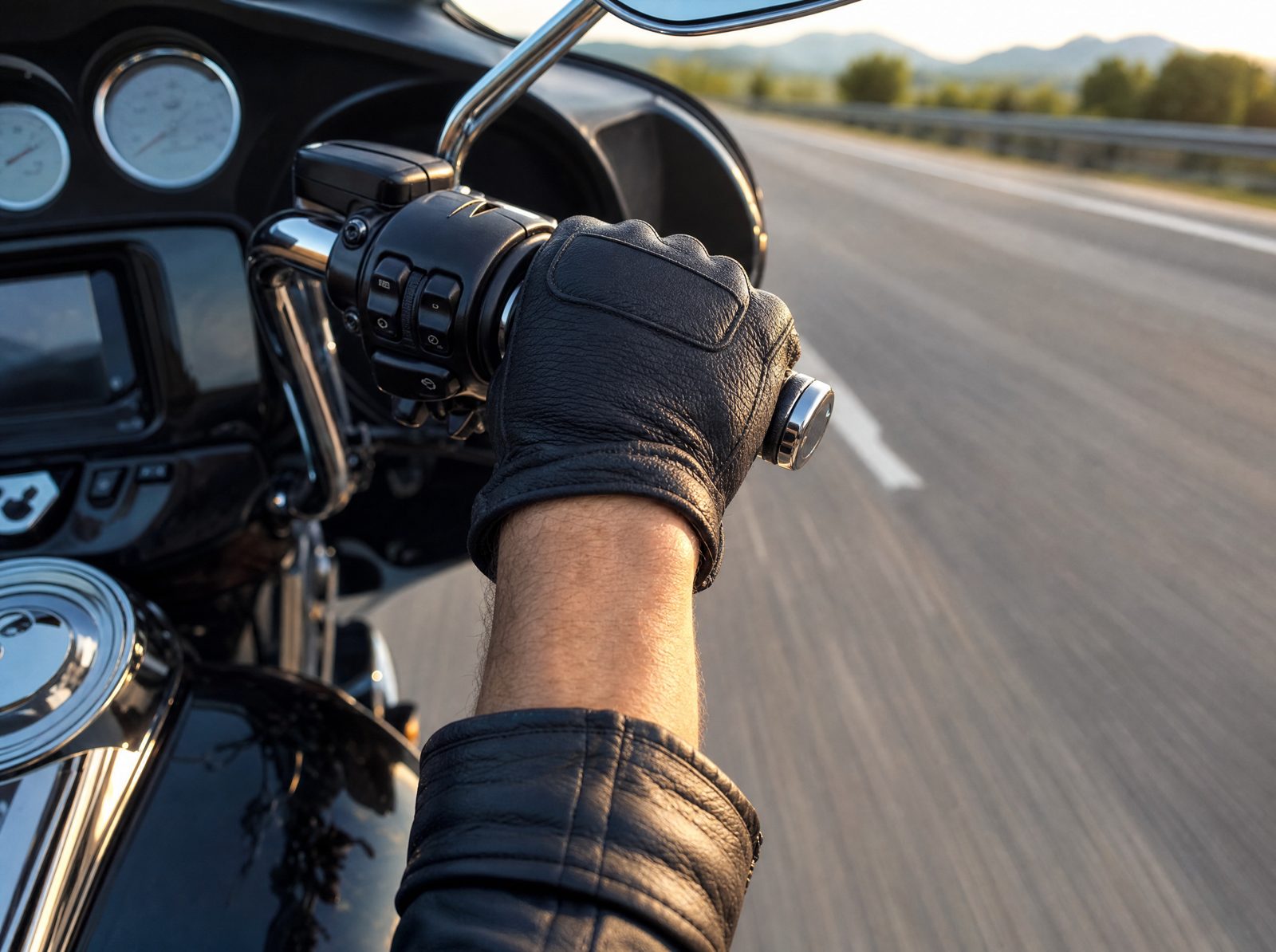
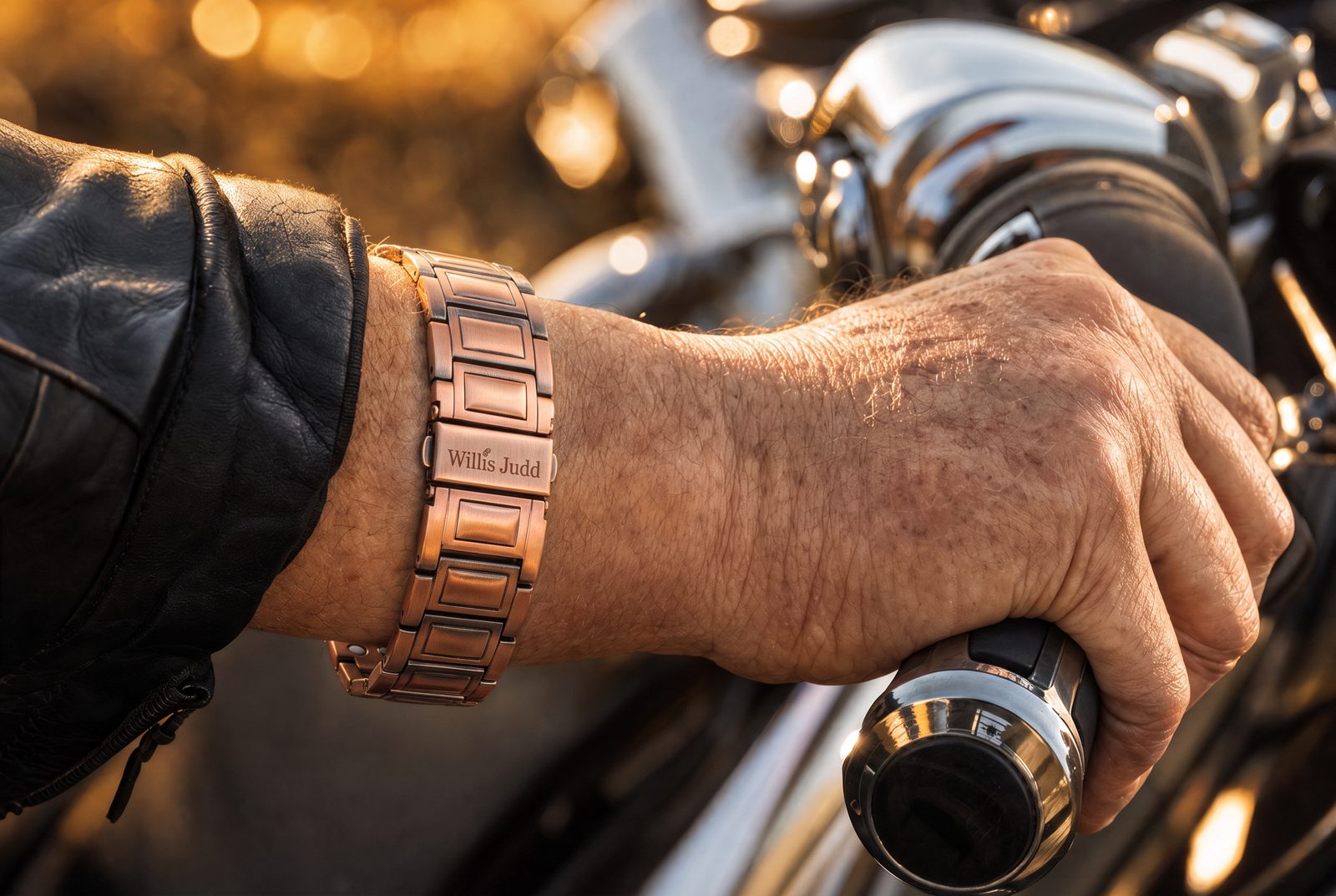
Then it’s on the road. Right hand goes tingly at 40 minutes, dead at an hour. You shake it out at lights. You start using cruise so you can swap hands.

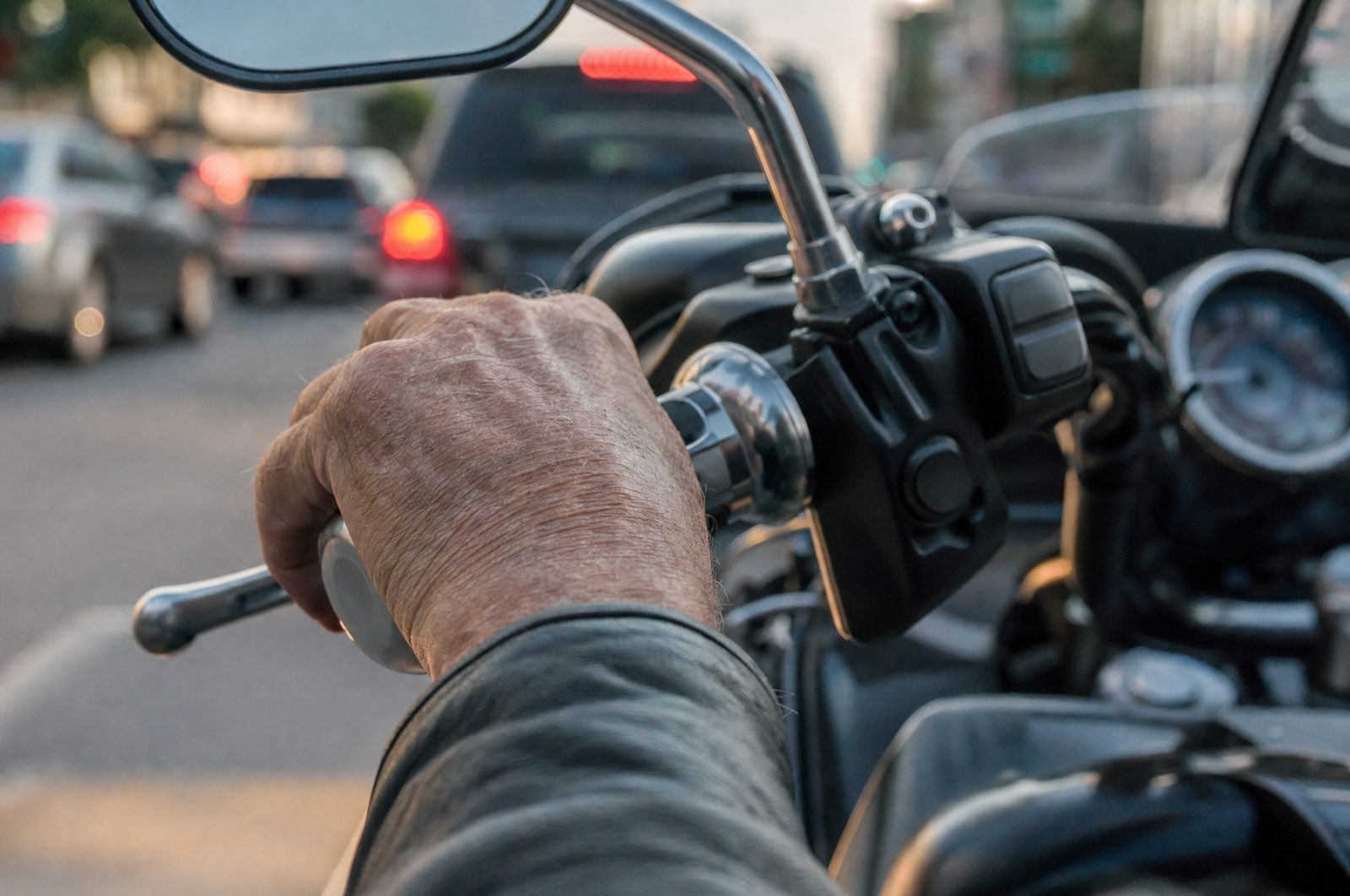
Then the left hand joins in. Traffic becomes the enemy. The pull that used to be nothing is a tennis ball you can’t quite close.

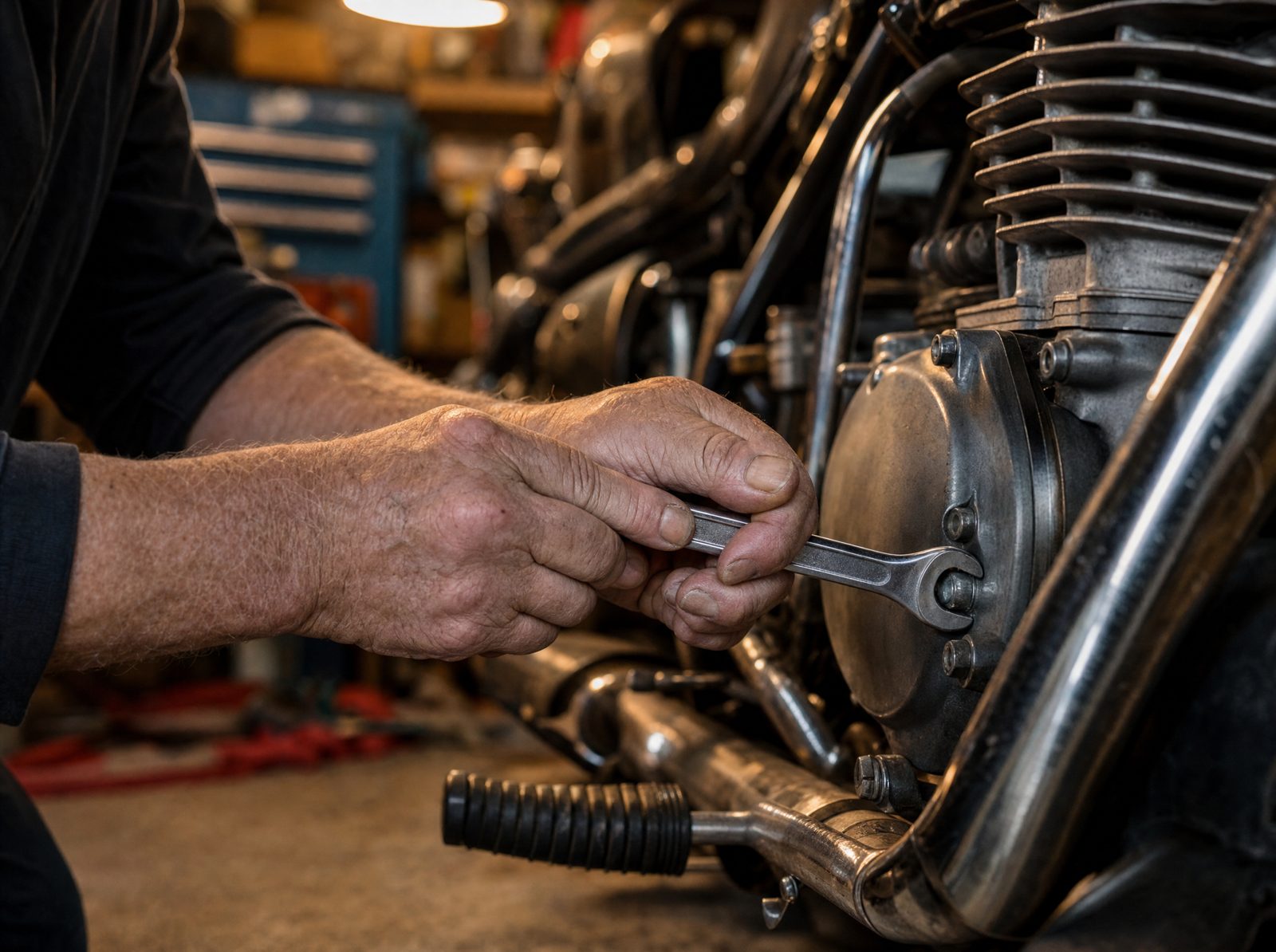
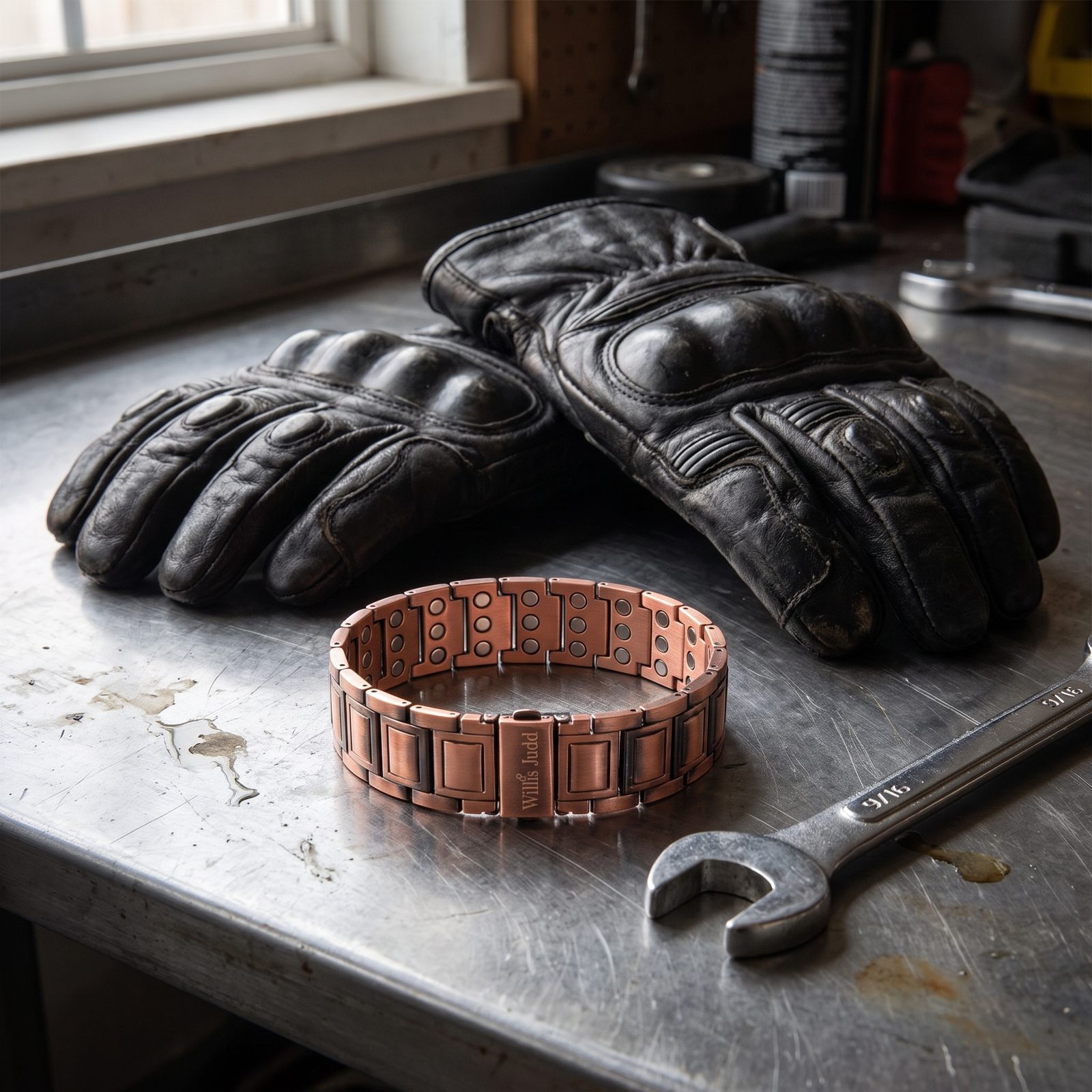
Then it follows you into the garage. The part you actually love — the Sunday maintenance, radio on — and you can’t hold the 9/16 long enough to break a bolt loose.

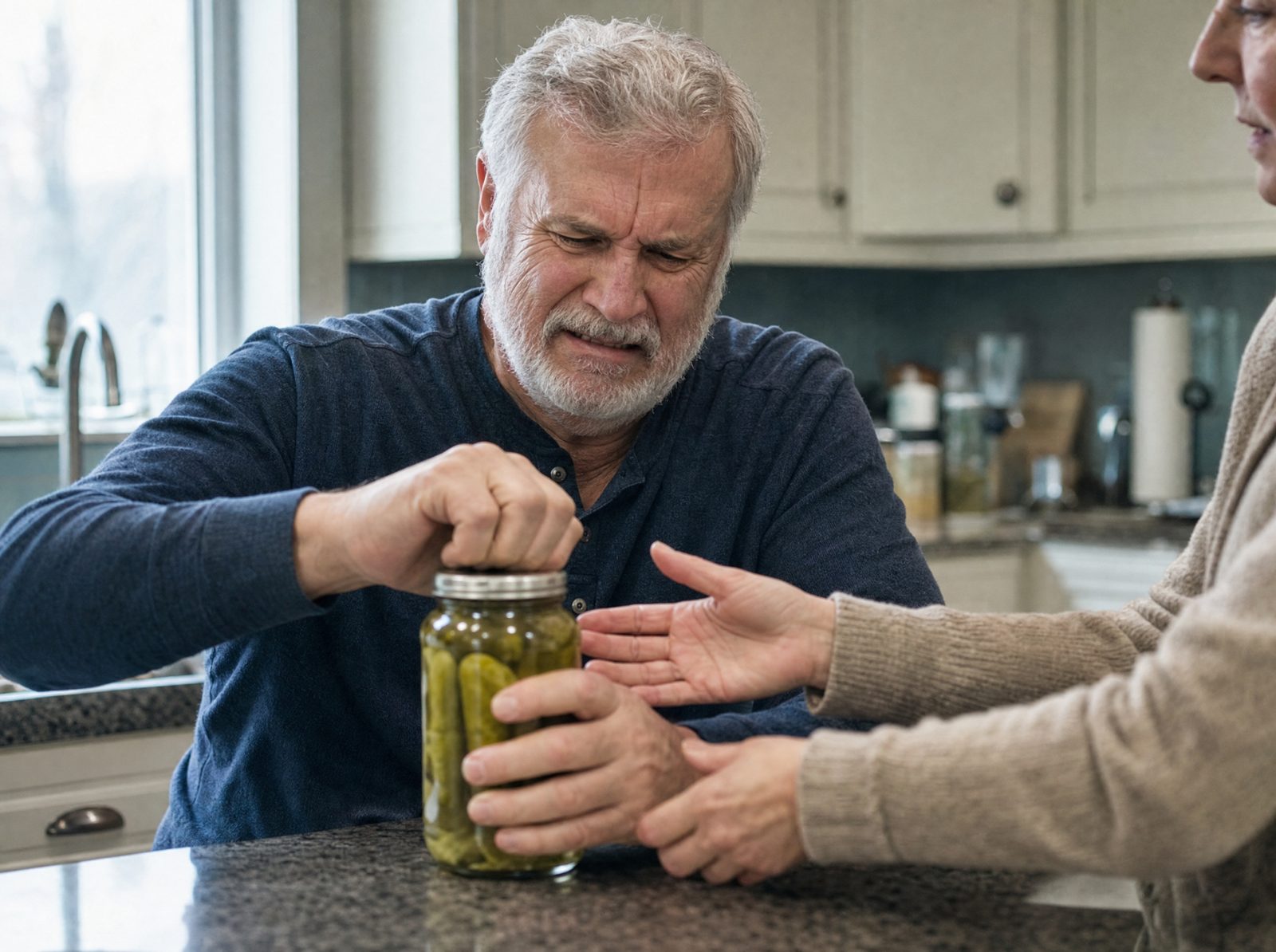
And then it’s the kitchen. The pickle jar goes to your wife. That’s the day the bike gets priced online — not because of the jar, because of what the jar means.
“I just turned 62 and want to ride well into my 80s — not sit in my recliner and remember when I used to ride.” That’s the survey too. Here’s the rest of it — the story, the mechanism, why the usual fixes never stop the ladder, and how it runs backwards.
Real answers from riders in a bracelet company’s post-purchase survey, when asked what their lowest moment with their hands looked like.
Me riding and trying to get pain out of hand by shaking it.
Not being able to control throttle. On motorcycle.
After about 25 to 30 minutes of riding I know I need to head back home!!!
Got off the motorbike after a long ride and couldn’t hold door key.
Watching my friends leave on their motorcycles while I can’t ride.
Me selling my motorcycle. Because I couldn’t hold the handlebars anymore.
Post-purchase survey answers, Willis Judd customers, 2026. Lightly trimmed.

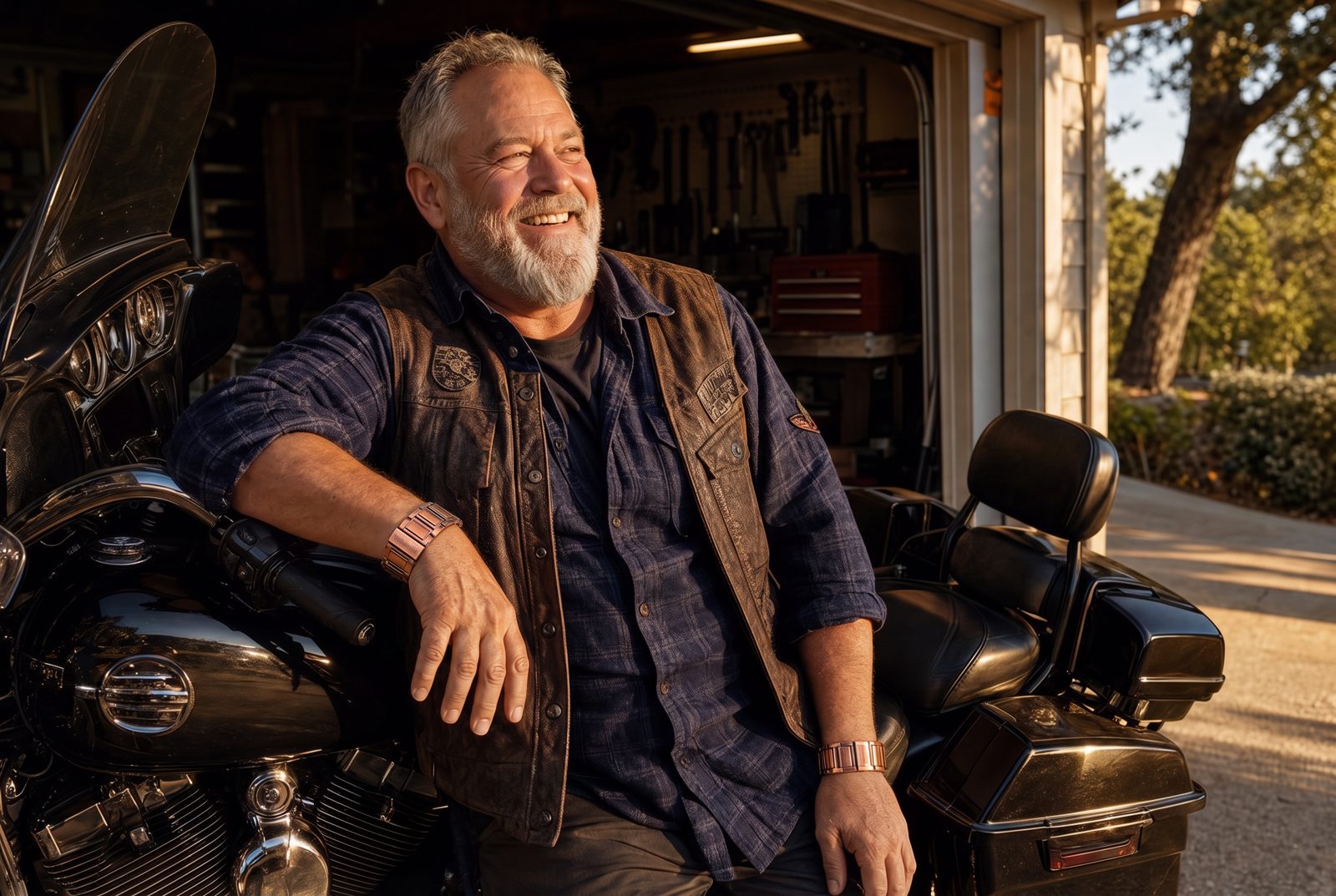
Ray, 63. Thirty-four years a diesel mechanic. Bike since he was nineteen. A big touring bagger, fourteen years old, that he maintains himself in the garage with the radio on.
Two seasons of the shake, called vibration. Then, coming home on the interstate, the throttle hand went completely numb — not tingly, gone — and he rode the exit ramp with his left hand across the tank.
He sat in the driveway with the engine off for a long time. That night he looked up what a fourteen-year-old bagger was worth.
He bowed out of the fall run for the first time in eleven years. Told the boys his back.
“It wasn’t my back. It was that I couldn’t trust my right hand for two days straight.”
Ray’s a composite of real riders in the survey. The driveway is real. The priced bike is real. If you recognise it, keep reading — the next part is the bit nobody told him.
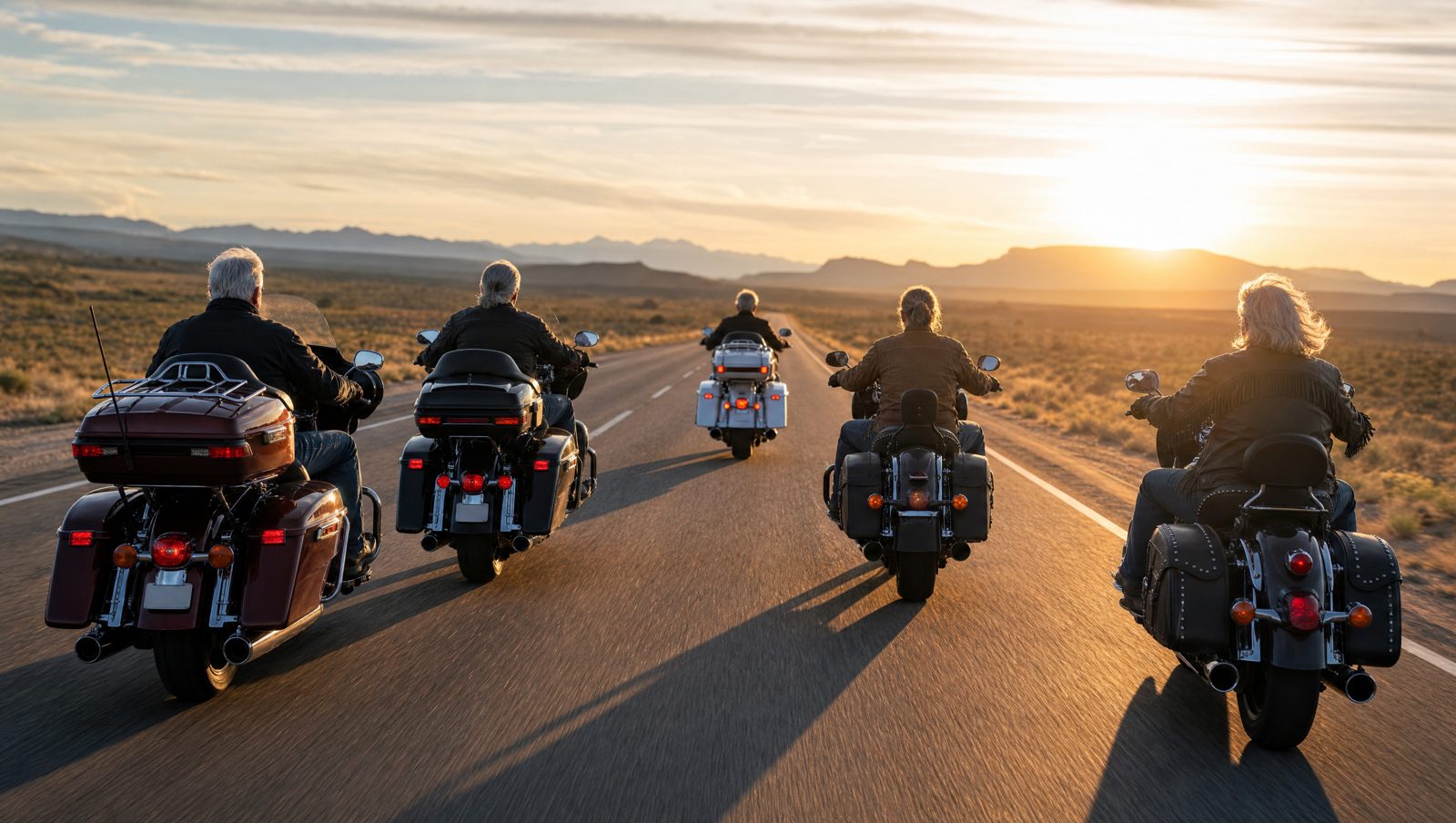
Grips, gloves and pills are all for during the ride.
The wrist needed something for the other 22 hours.
Ray’s list is most riders’ list. Look at the right-hand column.
| What you tried | What it does | When it’s working |
|---|---|---|
| Thicker grips / gel gloves | Take some vibration out of the bar | During the ride |
| Throttle lock / cruise | Lets you swap hands for a minute | During the ride |
| Bar-end weights | Damp the buzz a little | During the ride |
| The pill “as needed” | Quiets the signal for four hours — does nothing about the swelling | During (and after) the ride |
| Riding less | Gives the wrist a rest — and takes the bike with it | Never, really |
| Something worn on the wrist, 24/7 | There over the tunnel while the wrist is supposed to be recovering — sleep, work, coffee | All 24 hours |
That’s the whole idea. Not a better grip. Something that’s there when the wrist is recovering, not just when it’s working.
What riders who wear it describe, in the order it tends to come back — usually week three onward. Not everyone. Not overnight.

Ray found it the way most things worth knowing get found on a bike: somebody older told him.
Two-pump station, middle of nowhere. A fella on a kick-start shovelhead older than Ray’s son. Seventy-nine. Rode alone. Worked the clutch with his left while he paid with his right — no shake, no flex, like it was 1985.
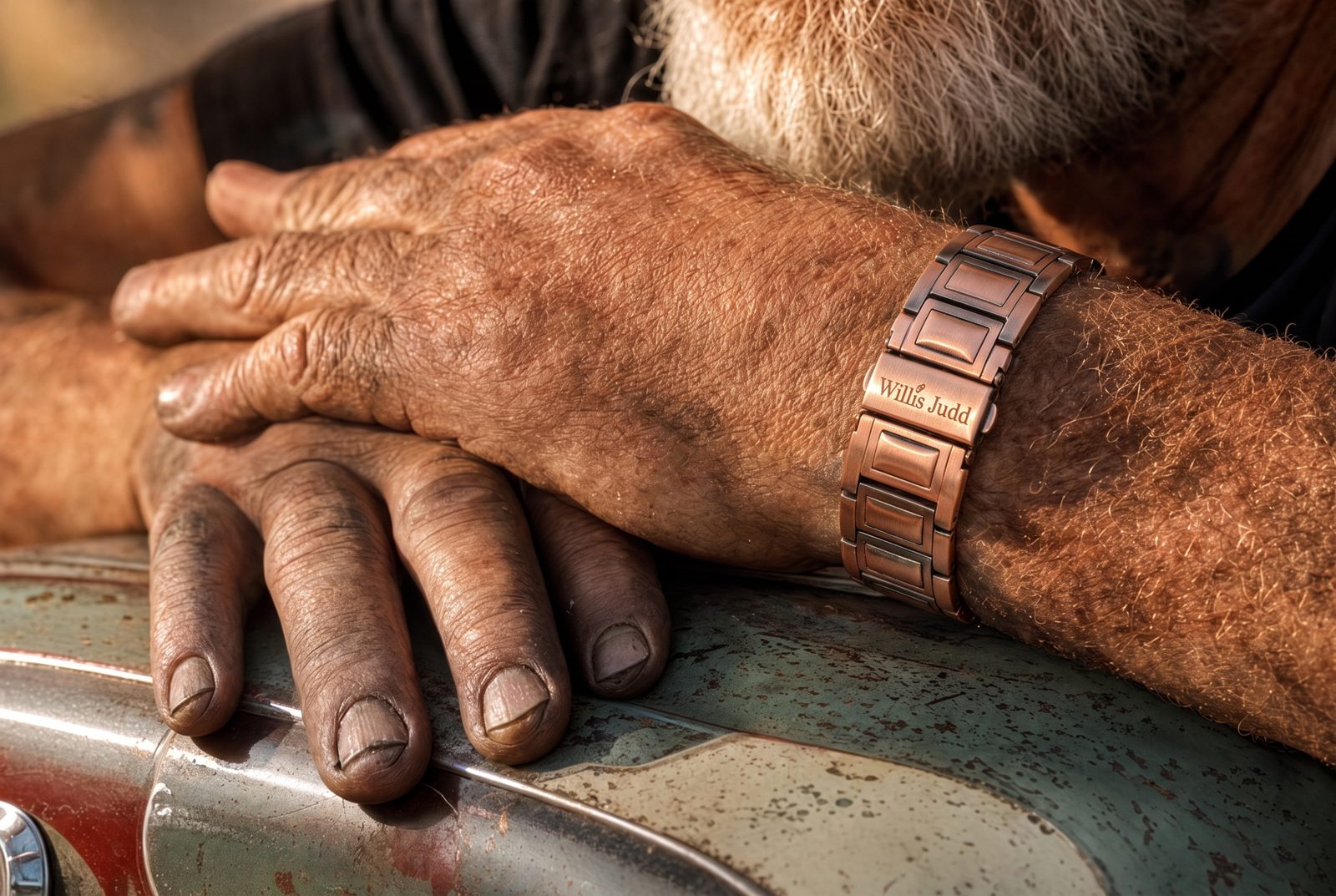
Ray asked what everybody asks. The old boy held up his wrist: copper bracelet, heavy, little magnets set into the inside of the links. Worn since he was Ray’s age. Never took it off.
“Don’t know if it’s the copper or the magnets or my head. Don’t care.”
Ray went home and read for three weeks. Here’s what he actually found, kept straight:
Known about copper and magnets for years, saw a lot of people wearing them. Going on 73 in a month, still riding my Harley — thought I would try one out.
Never sceptical — read the story about the guy who went to pick up a Harley. Gave up riding nearly a year ago. I’m nearly 83.
I ran into a guy that was wearing one, he swore it worked. Read all kinds of biker testimonials.
The old boy warned Ray: “Most of ’em ain’t copper. Zinc with a copper skin, and the magnets are the fridge kind.” He was right. Here’s what separates the one riders actually wear.

Both carry the same 60-day guarantee. If you’re torn, most guys go 3 for the throttle hand and come back for a second later.


Nothing happens. It’s heavy, it looks good, and that’s it. Take two links out so it sits flat under the glove.
Some guys notice something here. Most don’t. Keep it on — shower, sleep, wrenching. The whole point is the 22 hours you’re not riding.
This is where most riders say it shows up: you didn’t do the shake at the last three lights. Coffee cup was one hand. You didn’t think about it.
If it did nothing for you, send it back — full refund, no argument. That’s the guarantee. Some people never feel a difference; that’s what it’s for.
Week one, nothing. Week two, nothing he’d swear to. Somewhere in week three he came off a Saturday ride and realised he hadn’t done the shake at the last three lights. Hadn’t thought about it. Hadn’t needed to. By six weeks he was down to a pill on long-ride days — his doctor knows. Two hundred miles of chip-seal still tells him about it that night. But the baseline — waking up with a wrist that felt full and half-asleep — that’s most of what changed.
He made the fall run this year. Two days. Told the boys his back was better. They didn’t ask. If you’re not willing to give something three weeks, buy another set of grips.

Live price for your country. Real checkout on willis-judd.com. 60 days to decide.
Yes. It sits flat and it’s sized snug with the included tool, so it doesn’t ride up under the cuff. Most guys take two links out.
If it’s just the shake, one on the throttle hand. If the clutch pull has started to go too, most guys go two — one for each wrist — and the two-bracelet bundle is priced for that.
Honestly: some say days, most say two to three weeks, some never. Wear it every day, all day and night, and judge it at three weeks — not three rides.
All of it. Solid copper doesn’t rust. Brake cleaner has been on plenty of them.
3 is the original and the best seller. 6 is the upgraded version — double the magnets in the same solid copper — for severe pain or if you’ve worn one before and want more.
It’s jewelry, not a drug — but it contains strong magnets. If you have a pacemaker or an implanted device, ask your doctor first. Don’t change any medication without your doctor.
Fast, tracked delivery in the US, UK, Canada, Australia and New Zealand — the box above detects your country and shows your price, currency and checkout.
Then it’s a heavy, good-looking copper bracelet you send back inside 60 days for a refund. That’s the deal.